Wyckoff Method คืออะไร? วิธีอ่านพฤติกรรมสถาบันผ่าน Accumulation และ Distribution
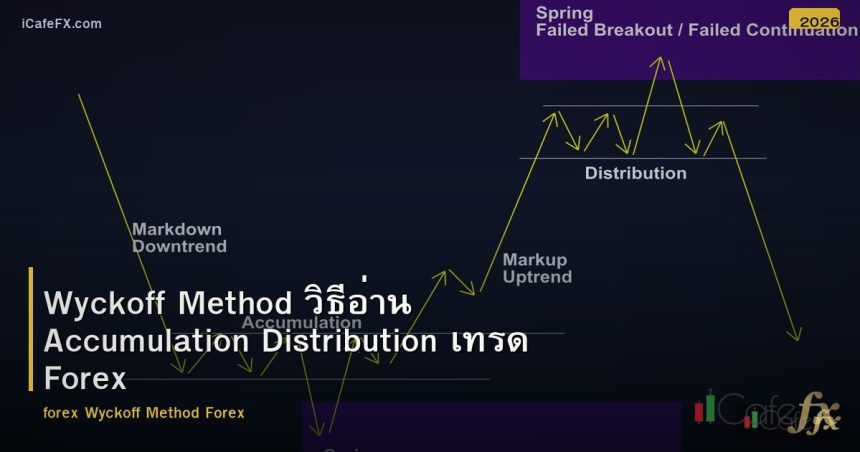
Wyckoff Method คือแนวทางวิเคราะห์ตลาดที่พัฒนาโดย Richard Wyckoff ในช่วงต้นศตวรรษที่ 20 อธิบายว่าสถาบันสะสม (Accumulate) และกระจาย (Distribute) Position อย่างไร Wyckoff Method Forex ประกอบด้วย 3 กฎหลัก (Supply/Demand Cause/Effect Effort/Result) และ 4 วงจรตลาด (Accumulation Markup Distribution Markdown) Wyckoff อธิบายว่า “Composite Man” (สถาบัน) ควบคุมตลาดโดยสะสม Position ในช่วง Range (Accumulation) แล้วดันราคาขึ้น (Markup) จากนั้นกระจายขาย (Distribution) แล้วปล่อยราคาลง (Markdown)
3 กฎของ Wyckoff
- กฎที่ 1 Supply/Demand: ราคาขึ้นเมื่อ Demand > Supply ราคาลงเมื่อ Supply > Demand ราคา Sideways เมื่อ Supply ≈ Demand
- กฎที่ 2 Cause/Effect: “เหตุ” (Cause) ที่สร้างใน Range จะกำหนด “ผล” (Effect) ของ Move Range ยิ่งกว้าง/นาน Move หลัง Breakout ยิ่งแรง
- กฎที่ 3 Effort/Result: Effort (Volume) ต้องสอดคล้องกับ Result (Price Move) Volume สูง + ราคาขึ้นแรง = สอดคล้อง / Volume สูง + ราคาไม่ไป = ไม่สอดคล้อง (อาจกลับตัว)
4 วงจรตลาด (Market Cycle)
| Phase | ลักษณะ | สถาบันทำอะไร | Retail ทำอะไร |
|---|---|---|---|
| Accumulation | Range หลัง Downtrend | ค่อยๆ สะสม Buy | ยัง Sell อยู่ (กลัว) |
| Markup | Uptrend | ดันราคาขึ้น | เริ่ม Buy (ช้าไป) |
| Distribution | Range หลัง Uptrend | ค่อยๆ กระจาย Sell | ยัง Buy อยู่ (โลภ) |
| Markdown | Downtrend | ปล่อยราคาลง | เริ่ม Sell (ช้าไป) |
Accumulation Schematic
- Phase A — Stopping the Downtrend: PS (Preliminary Support) → SC (Selling Climax) Volume สูงมาก → AR (Automatic Rally) → ST (Secondary Test of SC)
- Phase B — Building a Cause: Range กว้าง ราคาเด้งไปมา สถาบันสะสม Buy ทีละน้อย
- Phase C — Test (Spring): ราคาทะลุ Range Low (กวาด SSL) → กลับตัวขึ้นทันที = Spring (จุด Entry ที่ดีที่สุด)
- Phase D — Markup Begins: SOS (Sign of Strength) ราคาทะลุ Range High + Volume สูง LPS (Last Point of Support) Pullback สุดท้ายก่อนขึ้นต่อ
- Phase E — Uptrend: ราคาขึ้นต่อเนื่อง (Markup)
Distribution Schematic
- Phase A — Stopping the Uptrend: PSY (Preliminary Supply) → BC (Buying Climax) → AR (Automatic Reaction) → ST
- Phase B — Building a Cause: Range กว้าง สถาบันกระจาย Sell
- Phase C — Test (UTAD): ราคาทะลุ Range High (กวาด BSL) → กลับตัวลง = UTAD (Upthrust After Distribution)
- Phase D — Markdown Begins: SOW (Sign of Weakness) ราคาทะลุ Range Low LPSY (Last Point of Supply)
- Phase E — Downtrend: ราคาลงต่อเนื่อง (Markdown)
กลยุทธ์เทรด Wyckoff
กลยุทธ์ที่ 1: Spring Entry (Accumulation)
- Setup: ระบุ Accumulation Range → รอ Spring (ทะลุ Range Low แล้วกลับ)
- Buy: Spring + Bullish Candle กลับเข้า Range + Volume สูง → Buy
- SL: ใต้ Spring Low
- TP: Range High แล้ว SOS (Breakout ขึ้น)
- ข้อดี: Entry ที่ดีที่สุดใน Wyckoff SL แคบ R:R สูงมาก
กลยุทธ์ที่ 2: LPS Entry (หลัง SOS)
- Setup: SOS เกิดแล้ว (ทะลุ Range High) → รอ LPS (Pullback)
- Buy: ราคา Pullback มาที่ Range High เก่า (S/R Flip) + Bullish Candle → Buy
- SL: ใต้ LPS Level
- TP: Measured Move (ความสูง Range)
Wyckoff กับ SMC
| Wyckoff | SMC/ICT |
|---|---|
| Spring | Liquidity Sweep (SSL) |
| UTAD | Liquidity Sweep (BSL) |
| SOS/SOW | BOS (Break of Structure) |
| LPS/LPSY | Order Block Pullback |
| Accumulation | Bullish Range + Sweep + BOS |
ข้อจำกัด
- ซับซ้อน: ต้องเรียนรู้เยอะ ระบุ Phase ได้ยาก
- ใช้เวลา: Accumulation/Distribution ใช้เวลาหลายวัน-สัปดาห์
- Subjective: การระบุ Schematic อาจต่างกัน
- เหมาะกับ: D1/H4 Swing Trading Position Trading
สรุป Wyckoff Method สำหรับ Forex
Wyckoff อธิบายพฤติกรรมสถาบัน 3 กฎ Supply/Demand Cause/Effect Effort/Result 4 วงจร Accumulation Markup Distribution Markdown Spring = Entry ที่ดีที่สุด (กวาด SSL แล้วกลับ) SOS = BOS LPS = Pullback สุดท้าย Wyckoff = SMC ในเวอร์ชันคลาสสิก ติดตามสัญญาณเทรดได้ที่ xmsignal.com และอ่านบทความเพิ่มเติมที่ siamlancard.com และ siam2r.com





 TH ▼
TH ▼
 English
 Tiếng Việt
 Indonesia
 Melayu
 ខ្មែរ
ខ្មែរ ລາວ
ລາວ 日本語
日本語 한국어
한국어 简体中文
简体中文